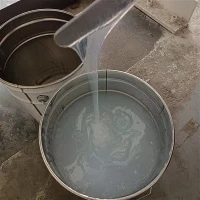
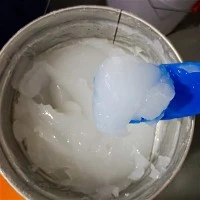
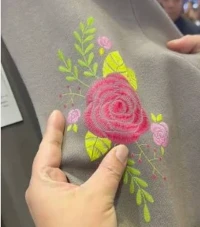
For professional screen printing manufacturers, the key question is not simply "What is silicone ink?" but rather "What kind of silicone ink is suitable for my fabric and application?"
YRsilicone develops professional silicone ink for fabric printing solutions designed for different textile requirements, helping manufacturers achieve reliable adhesion, excellent elasticity, and stable production performance.
Different Fabrics Create Different Printing Challenges
Polyester Fabric Requires Strong Adhesion Performance
Polyester is one of the most commonly used synthetic fibers in sportswear, fashion garments, and accessories.
However, polyester fabrics often have:
Smooth fiber surfaces
Low moisture absorption
Difficult ink bonding characteristics

For polyester applications, a suitable silicone ink should provide strong bonding performance while maintaining a smooth surface appearance.
Nylon Fabric Needs Flexible Bonding
Nylon is widely used in outdoor products, functional clothing, and lightweight textiles because of its strength and flexibility.
However, nylon surfaces can be challenging for silicone printing because they require:
Strong adhesion
High flexibility
Good resistance to repeated movement
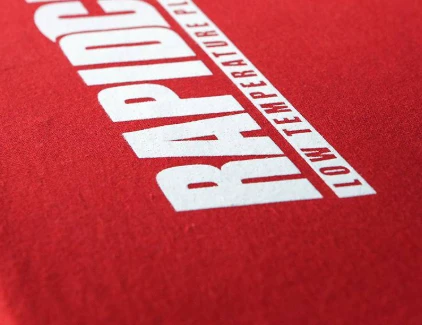
A suitable textile silicone ink should maintain bonding performance without becoming brittle after curing.
Elastic Fabrics Require High Stretch Performance
Elastic materials are among the most demanding substrates for screen printing.
If the ink layer cannot move together with the fabric, common problems include:
Cracking
Print distortion
Edge peeling
For these applications, manufacturers usually require high stretch silicone ink with excellent elasticity and recovery performance.
YRsilicone Silicone Ink Solutions for Fabric Printing
As a professional silicone material manufacturer, YRsilicone focuses on developing silicone printing solutions for textile applications.
Our silicone ink systems are designed to help manufacturers solve common production challenges such as:
Poor adhesion
Insufficient elasticity
Surface defects
Inconsistent printing results
♦ High Stretch Silicone Ink for Elastic Fabric Applications
For highly flexible materials, YRsilicone provides silicone ink solutions designed for repeated stretching and recovery.
Key advantages include:
Excellent Elasticity(such as XG-866AR-GT)
The silicone layer can expand and recover together with the fabric, reducing cracking problems.

Strong Fabric Adhesion(such as XG-180A-1)
The formulation helps improve bonding performance on challenging textile materials.
Soft and Comfortable Hand Feel(such as XG-866AR)
The finished print maintains a smooth and flexible surface, making it suitable for apparel applications.
♦ Silicone Ink Solutions for Difficult Fabrics
Some fabrics require additional adhesion improvement before silicone printing. For challenging substrates, YRsilicone provides supporting solutions including silicone primers and adhesion promoters.
SND-110A Silicone Primer
SND-110A is another adhesion solution designed for specific textile applications.
Recommended mixing ratio:
The correct primer selection depends on the fabric type and production requirements.

Recommended Process for Better Silicone Printing Results
Step 1: Identify the Fabric Type
Before selecting silicone ink, confirm:
Fiber composition
Fabric structure
Elasticity level
Surface treatment
Step 2: Select Suitable Silicone Ink
Different fabrics require different performance characteristics.
| Fabric Type | Recommended Silicone Ink Features |
|---|---|
| Polyester | Strong adhesion and stable curing |
| Nylon | Flexible bonding and durability |
| Elastic fabric | High stretch and crack resistance |
Step 3: Perform Sample Testing
Before mass production, manufacturers should test:
Adhesion strength
Stretch performance
Washing resistance
Surface appearance
Testing helps prevent production problems.
Conclusion: Choosing the Right Silicone Ink Improves Fabric Printing Quality
Selecting the correct silicone ink is essential for achieving durable and high-quality fabric printing results.
Different materials require different solutions:
★ Polyester needs strong adhesion
★ Nylon requires flexible bonding
★ Elastic fabrics require high stretch performance
The right silicone ink for fabric printing can improve durability, reduce production problems, and create better finished products.
With professional silicone ink technology and technical support, YRsilicone helps textile manufacturers achieve reliable printing performance across a wide range of fabric applications.