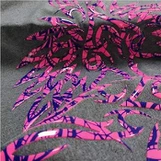
Screen Printing Fabric with Silicone: A Revolutionary Printing Method
Screen printing on fabric has been around for many years and is an incredibly popular method for decorating and customizing textiles. It is prevalent in the fashion industry, as well as in the production of promotional materials, such as T-shirts, tote bags, and hats, underwear,skirt,lace socks for companies and events. However, traditional screen printing methods have some limitations, especially when it comes to printing on certain fabrics or achieving specific design effects.

That's where silicone screen printing comes in. This innovative printing method uses silicone ink, a specialized type of ink that contains silicone polymers, allowing it to adhere to a wide range of fabrics, including synthetic blends and performance materials. It also offers several advantages over traditional ink, such as better opacity, color vibrancy, and durability, making it an excellent choice for high-quality, long-lasting prints.
Silicone screen printing works similarly to traditional screen printing, where a stencil or "screen" is used to transfer images onto fabric. However, instead of using traditional ink, a silicone ink is used. The ink is applied to the stencil using a squeegee, which pushes the ink through the stencil and onto the fabric. Once the ink dries, it forms a durable, flexible layer on top of the fabric.
One of the biggest challenges of screen printing on fabric is creating crisp, detailed designs with multiple colors. Traditional screen printing requires creating separate stencils for each color and layering them one on top of the other, which can be time-consuming and challenging to align correctly. Silicone screen printing, on the other hand, can achieve more complex designs with fewer screens and less setup time.
Silicone ink can also be manipulated to achieve various design effects, such as glossy or matte finishes or raised textures on the fabric's surface. Additionally, silicone ink is resistant to fading, cracking, peeling, and other forms of wear and tear, making it ideal for producing high-quality prints that will last for years.
One particular challenge in screen printing fabrics is the bleed factor. Traditional screen printing requires the ink to sit on top of the fabric and not soak into it. This can cause the ink to bleed around the edges of the design, which leads to a less crisp and defined image. With silicone screen printing, the ink can penetrate into the fabric fibers, creating a clean, sharp image that won't bleed or smudge.
The versatility of silicone screen printing makes it an excellent option for a wide range of applications, from fashion to promotional items. It is even used in the production of industrial and medical textiles due to its strength, durability, and resistance to chemicals and heat.
In conclusion, screen printing fabric with silicone ink is a revolutionary printing method that offers numerous advantages over traditional screen printing. Its ability to adhere to a broad range of fabrics, create complex designs with fewer screens, and achieve unique design effects make it an ideal choice for businesses and individuals looking to produce high-quality, long-lasting textiles. The challenges of traditional screen printing that silicone ink addresses, such as the bleed factor, make it a desirable alternative for individuals looking for a defined image on their printed fabric. As technology continues to improve, silicone screen printing is only set to become more popular as a method for customizing and decorating textiles.
Hot Tags: screen printing fabric, suppliers, factory, custom, wholesale, buy, bulk, low price, in stock, free sample, made in China, heat transfer printing on cotton fabric, Bulk Dye Migration Blocker, Dye Migration Blocker factory, shirts for screen printing, T Shirt Transfer Press, Silicone Printing Ink