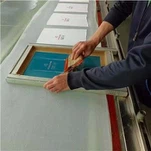
Water-based ink is a uniform paste made from a combination of binders, pigments, and additives. It primarily consists of water-soluble resins, organic pigments, solvents, and other relevant additives. Water-based inks are particularly suitable for printing products that require strict hygiene conditions, such as packaging for tobacco, alcohol, food, beverages, pharmaceuticals, and children's toys.
Classification of Water-based Inks:
Modern inks are generally categorized into four major types based on their printing plate styles:
Relief Printing Ink: Used for printing books, newspapers, brochures, forms, and ledgers. The defining feature of relief printing is that the inked areas of the plate are raised compared to the non-inked areas. Relief printing inks are further categorized based on the printing press types and applications, such as letterpress ink, copperplate ink, flexographic ink, and rotary flexographic ink.
Planographic Ink: Suitable for lithographic printing, where the printing plate is flat and both the printed and non-printed areas are on the same plane. The inked areas are oleophilic (oil-loving), and the non-inked areas are hydrophilic (water-loving), relying on the principle of oil-water repulsion. Planographic inks must have water resistance and are further divided into offset inks, web offset inks, lithographic inks, and others.
Gravure Ink: Used in gravure printing, where ink is applied to recessed areas of the plate. Non-printed areas are wiped clean, and then printing is done. Gravure inks are classified into engraved gravure inks and photogravure inks.
Screen Printing Ink: Ink used for printing through the mesh of a screen. Screen printing inks are further divided into stencil inks and silk screen inks.
Components of Water-based Ink:
Water-Soluble Resin: Water-soluble or water-dispersible resins serve as the binder in water-based inks, significantly affecting the ink's viscosity, adhesion, gloss, drying, and printability. Water-based inks are made through a chemical process and physical mixing of water-based polymers, organic pigments, resins, surfactants, and other additives. The use of water instead of toxic organic solvents (which traditionally make up 30-70% of conventional inks) eliminates volatile organic compounds (VOCs), making the printing process safer for workers and more environmentally friendly.
Pigments: Organic and inorganic pigments are used in water-based inks. Most resins used in water-based inks are alkaline-soluble, so pigments that are resistant to alkaline conditions must be selected. The dispersion density of pigments in water-based ink is much higher than in solvent-based ink. Water's surface tension and polarity differ greatly from those of solvents, which makes pigment dispersion more difficult and impacts ink stability, viscosity, and pH. To solve stability issues, surfactants are added to increase the affinity between the resin and water and the pigment and water-soluble binder.
Additives: Various additives are required to improve the performance of water-based inks. Common additives include:
Defoamer: Eliminates foam in the ink, typically used at a ratio of 1-2%.
Stabilizer: Prevents the ink from coagulating or molding during storage or transport and regulates the ink's viscosity and pH, often using ammonia or ethanolamine.
Other Additives: Dispersants, preservatives, leveling agents, thickeners, slip agents, and crosslinking agents.
Solvents: Water-based inks use solvents to dissolve resins, adjust viscosity, and control drying speed. These solvents are primarily water and small amounts of alcohols, such as ethanol, butanol, and isopropanol. These solvents enhance the resin's dissolving ability, improve pigment dispersion, and accelerate penetration, while also reducing foaming.
Production Process:
Grinding Color Paste:
Water-soluble resins, pigments, additives, and water are mixed and dispersed using a high-speed disperser and grinding equipment to produce a color paste.
Ink Formulation:
The prepared color paste is mixed with additional additives and water, and the ink is further ground and dispersed to achieve the desired fineness, gloss, and color strength. The ink is then filtered and packaged.
Key Technical Indicators:
Color: Close to the standard sample.
Fineness: Less than 20 microns (measured by a 0-50 micrometer scraper fineness gauge).
Viscosity: 20±5 seconds (measured by a RIGOSHA4# cup at 25°C).
pH Value: 8.0–9.5 (measured by a portable pH meter).
Heavy Metal Content: Conforms to international packaging green environmental standards.
Resistance Properties: Meets relevant standards.
Usage Requirements:
Mix well before use to ensure uniform composition.
Cover tightly after use to prevent contamination and skinning.
Filter impurities in leftover ink before reuse.
Store in a cool, dry place and avoid exposure to high temperatures or direct sunlight. Water-based inks typically have a shelf life of up to one year under proper storage conditions.
Adjust viscosity with water if needed.
Water-based ink is a cleaner, safer alternative to traditional solvent-based inks, and its use helps improve the environmental impact of printing processes.