## **Screen Printing with Silicone Ink: A Complete Step-by-Step Process Guide**
Silicone screen printing has become a preferred technique in the textile industry due to its flexibility, vibrant color performance, soft hand-feel, and outstanding durability. To achieve the best results, each printing step must follow a carefully designed recipe, including mesh selection, material mixing, and proper curing. The following guide explains a complete multi-layer silicone printing process based on the screen printing recipe provided.
### **1. Undercoating Layer – Establishing the Foundation**
The printing process begins with an **undercoating layer**, which prepares the fabric for the subsequent silicone applications. Using a **120 mesh screen**, the printer applies *Undercoating Silicone (XG-180A-1) mixed with Catalyst XG-180B-1 (10%)*. This layer improves adhesion between the fabric and the upper silicone layers. Two rounds of printing ensure proper base coverage and stability.
### **2. Puff Layer – Creating Soft Elevation**
Next is the **puff layer**, also printed with a **120 mesh count**. The material used is *Puff Silicone XG-8661-CRT combined with Catalyst XG-866B-2 (2%)*. This layer adds thickness and a raised effect to the design. A total of **four printing rounds** are required to build the desired puff height. Once finished, the piece undergoes **heat pressing at 170°C for 40 seconds**, allowing the puff structure to expand and stabilize.
### **3. Color Layers – Building Vibrant Designs**
After heat pressing, the printer moves into the color application stage. All colors use **Super Soft Silicone XG-866A-CR**, combined with *Catalyst XG-866B-2 (2%)* and the corresponding pigment. A **250 mesh screen** is recommended for sharp details and smooth coverage.
Each color layer is printed **three times** to achieve bright, uniform, and stable results.
* **White Color:** Uses pigment *XG-102* for a clean and opaque white.
* **Yellow Color:** Uses pigment *XG-203* to achieve a vivid yellow tone.
* **Red Color:** Uses pigment *XG-302* for rich red coverage.
* **Blue Color:** Uses pigment *XG-408* to deliver strong, consistent blue.
* **Black Color:** Uses pigment *XG-501* for deep, solid black details.
These super soft silicone layers create strong color vibrancy while maintaining softness and flexibility, ideal for sportswear, fashion garments, and performance fabrics.
### **4. Glossy & Chameleon Effect – Adding Visual Impact**
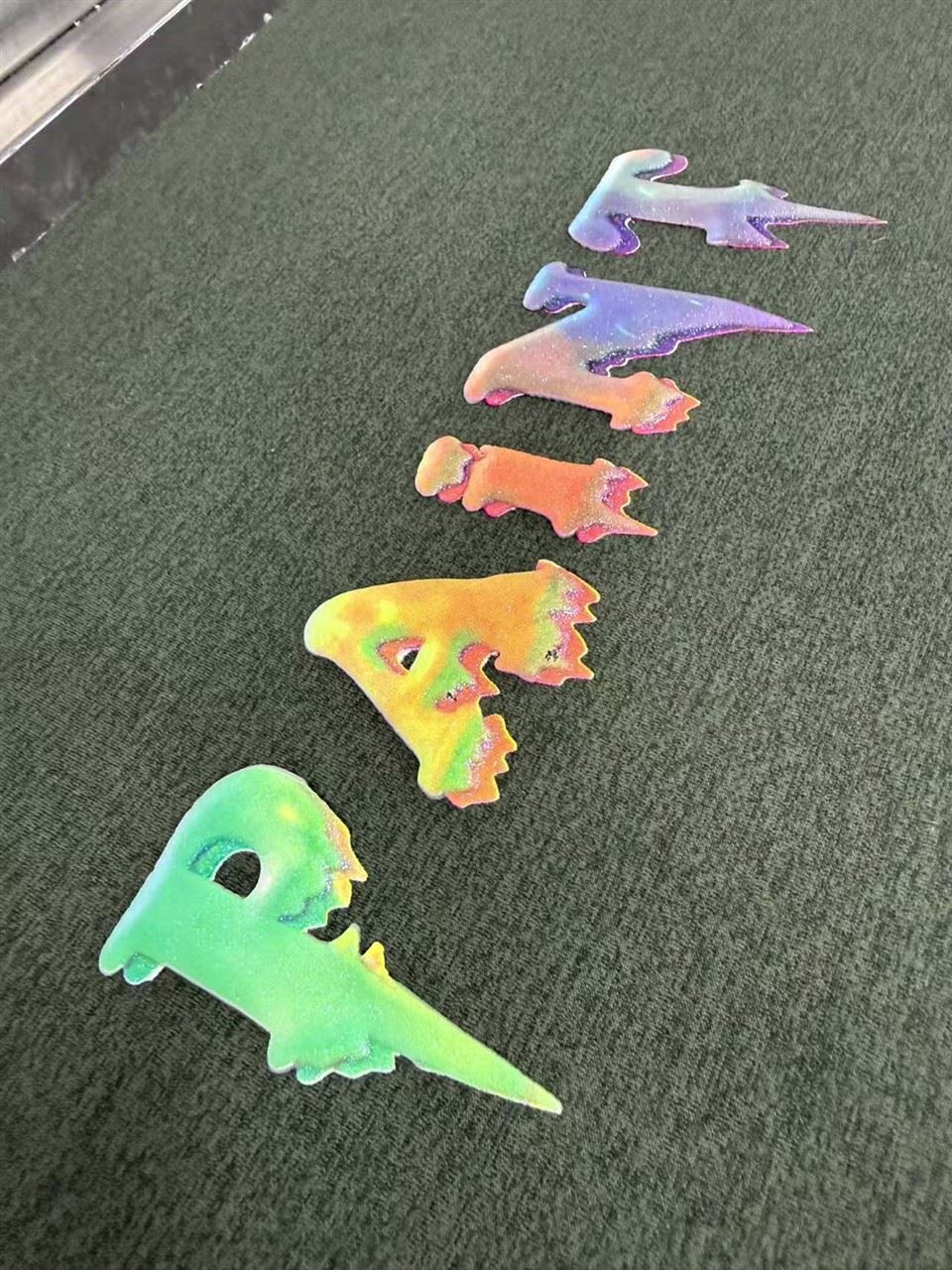
To enhance visual appeal, a **Glossy and Chameleon layer** can be added using a **120 mesh screen**. The materials include *Glossy Silicone XG-399-6W*, *Chameleon Powder*, and *Catalyst XG-866B-2 (2%)*. This layer delivers a shiny surface and a dynamic color-shifting effect. Two rounds are sufficient to build a smooth, reflective finishing layer.
### **5. Final Curing – Ensuring Long-Term Durability**
The final step is **oven baking at 100°C for 30 minutes**. This controlled curing process ensures complete crosslinking of the silicone layers, resulting in excellent washability, elasticity, and long-term durability. A proper cure is essential to prevent stickiness, color fading, or delamination.
---
### **Conclusion**
This screen printing recipe outlines a professional, multi-layer silicone printing process that combines durability with premium visual effects. By following the mesh counts, material ratios, layer sequences, and curing conditions, printers can consistently achieve high-quality results suitable for both fashion and industrial textile applications.
Hot Tags: puff,glossy,chameleon effect, suppliers, factory, custom, wholesale, buy, bulk, low price, in stock, free sample, made in China