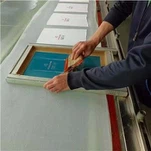
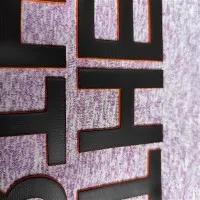
Choosing the right mesh for silicone screen printing is critical because silicone ink is thicker and more elastic than plastisol or water-based inks. The correct mesh directly affects ink deposit, adhesion, detail, texture, and durability. Below is a practical guide used by professional textile printers.
1. Understand Mesh Count Basics
Mesh count refers to the number of threads per inch (or cm).
Lower mesh count → thicker ink deposit, stronger coverage
Higher mesh count→ finer details, thinner ink layer
Silicone inks usually require lower mesh counts than traditional inks because of their high viscosity.
2. Recommended Mesh Counts for Silicone Printing
Undercoating / Adhesion Layer
Mesh: 80–120
Purpose: Improve adhesion on polyester, nylon, waterproof, or blended fabrics
Reason: Allows enough silicone to penetrate fabric fibers and create a strong bonding base
Common use: XG-180A-1, XG-110A undercoating silicone
Tip: Always flash dry between passes to avoid ink buildup.
High-Density / Thick Silicone Printing
Mesh: 80–120
Purpose:3D effects, raised logos, embossed or molded looks
Reason:Low mesh delivers a heavy ink deposit for strong dimensional effect
Applications:High-density silicone, puff silicone, molded textures
Puff / Foaming Silicone
Mesh:100–120
Purpose:Expansion and soft raised effect
Reason: Balanced ink flow ensures proper foaming without collapse
Standard Silicone Printing
Mesh:120–160
Purpose: Regular logos, solid areas
Reason: Good balance between coverage and smooth surface
Fine Detail / Thin Lines / Text
Mesh:160–200
Purpose:Sharp lines, small text, detailed designs
Reason: Controls ink flow and improves edge definition
Note:Silicone ink must be well-mixed and sometimes slightly diluted (with approved silicone additives) when using higher mesh counts.
Four-Color Process / Halftone Effects
Mesh:180–230
Purpose: Gradients, photographic effects
Reason:Precise ink control is required for dot accuracy
Important: Use slow strokes and high-tension screens to prevent mesh distortion.
3. Screen Fabric & Tension Recommendations
Mesh material: Polyester monofilament (best for silicone)
Screen tension:
Standard printing: 25–30 N/cm
High-density or fine detail: 30–35 N/cm
Higher tension improves ink release and reduces smudging.
4. Other Factors That Affect Mesh Choice
✔ Ink Viscosity
Thicker silicone → lower mesh
Thinner silicone → higher mesh
✔ Fabric Type
Cotton: medium mesh (120–160)
Polyester / Nylon: lower mesh (80–120) + undercoating
Waterproof fabrics: always use low mesh undercoating first
✔ Printing Method
Manual printing: slightly lower mesh for easier ink flow
Automatic printing: higher mesh possible due to consistent pressure
5. Practical Mesh Selection Table
| Application Type | Recommended Mesh |
| Undercoating | 80–120 |
| High-density | 80–120 |
| Puff silicone | 100–120 |
| Standard silicone | 120–160 |
| Fine details | 160–200 |
| Halftone / CMYK | 180–230 |
6. Final Tips from Experience
Always test print before production
Use proper catalyst ratio to avoid curing issues
Flash dry between layers
Clean screens immediately after use (silicone cures fast)