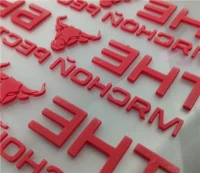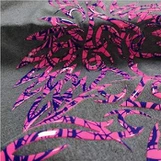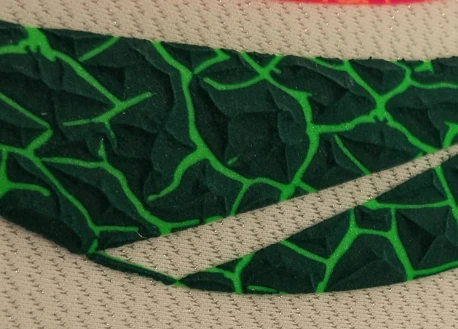
Creating distinctive 3D effects on garments is an effective way for clothing brands to make their products stand out. Compared with conventional flat printing, raised silicone prints add depth, texture, and a stronger visual impact to textile designs.
For garment manufacturers, textile printing factories, and fashion brands looking to develop distinctive 3D printing effects, understanding the characteristics and applications of sponge foam silicone is essential.
What Is Sponge Foam Silicone Ink?
Sponge foam silicone ink is a specialized silicone-based printing material used to create raised and three-dimensional effects on textile surfaces.
It is typically applied through screen printing. During high-temperature curing, the material undergoes a foaming process and develops a raised structure, giving the printed pattern greater height and dimension. Unlike ordinary silicone ink, which generally produces a relatively flat or slightly raised surface, sponge foam silicone is designed to create a more noticeable 3D effect.
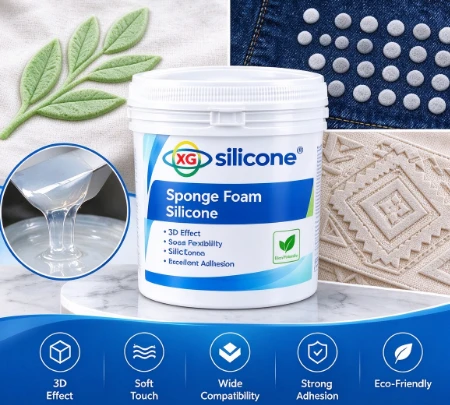
Its main characteristics include:
Foamed 3D Structure: Creates visible raised effects on fabric surfaces.
Closed-Cell Structure: Forms a closed-cell internal structure after proper curing.
Firm Hand Feel: Provides a firm and supportive feel rather than a loose, soft sponge-like texture.
Textile Compatibility: Suitable for polyester, cotton, nylon, and blended fabrics, subject to application testing.
Decorative Versatility: Can be used for raised logos, textured patterns, and other customized textile designs.
Key Features and Advantages of Sponge Foam Silicone Ink
The value of sponge foam silicone is not limited to its ability to create raised patterns. Its final structure, appearance, and application performance are also important considerations for textile printing manufacturers.
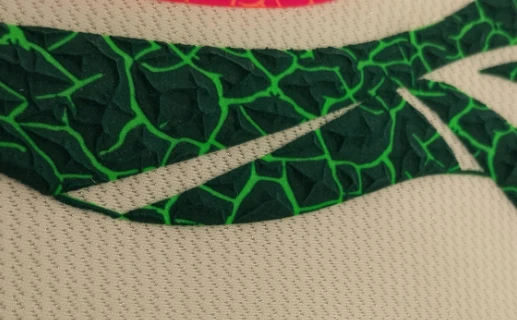
Distinctive 3D Raised Printing Effect
One of the main advantages of sponge foam silicone is its ability to create noticeable three-dimensional printing effects.
After foaming and curing, the printed design rises above the fabric surface, creating more depth than conventional flat silicone printing.
This makes it suitable for:
Raised brand logos.
Three-dimensional decorative graphics.
Textured lines and patterns.
Special visual effects on sportswear and fashion apparel.
The raised appearance helps printed designs attract attention and gives garment manufacturers more creative possibilities.
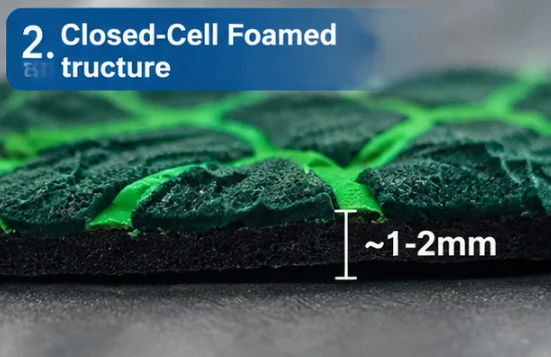
Closed-Cell Foamed Structure
The internal structure is an important characteristic of sponge foam silicone.
After proper high-temperature curing, the material develops a closed-cell foamed structure rather than an open, loose sponge-like structure.
This structure helps create a firm and relatively compact printed form, supporting the overall shape and appearance of the raised design.
For manufacturers, this is particularly important when developing 3D prints that need to maintain a defined shape rather than having a loose or easily deformed surface.
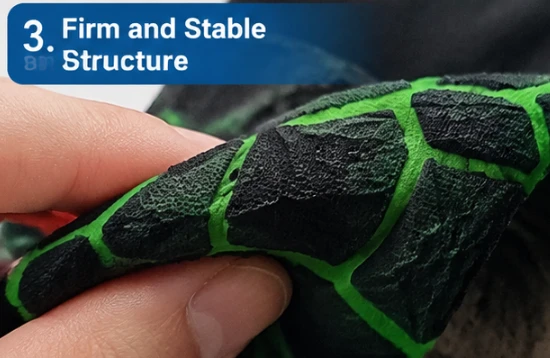
Firm and Stable 3D Structure
Unlike materials designed to produce a very soft sponge-like texture, sponge foam silicone has a firm hand feel after curing.
Its supportive structure helps the printed design retain its raised appearance during normal garment use.
For applications involving repeated handling, washing, or compression, the final performance should be evaluated through appropriate testing. Printing thickness, curing conditions, fabric compatibility, and adhesion can all influence the result.
Good Resistance to Washing and Daily Handling
For garment applications, the durability of raised printing is just as important as its initial appearance.
A 3D print should not only look attractive immediately after production but should also maintain its appearance during regular use. With suitable material selection, fabric preparation, and curing conditions, sponge foam silicone can be developed for textile applications that require resistance to everyday handling and washing.
Printing factories are encouraged to conduct washing, compression, and adhesion tests before mass production to verify the performance under their actual application conditions.

Sponge Foam Silicone vs. Traditional High-Density Silicone: What Is the Difference?
Both sponge foam silicone and traditional high-density silicone are used to create raised printing effects on fabrics. However, their approaches to achieving three-dimensional results are different. Traditional high-density silicone mainly relies on building up material thickness through printing layers. Sponge foam silicone, on the other hand, develops its volume through foaming during the curing process.
| Comparison | Traditional High-Density Silicone | Sponge Foam Silicone |
|---|---|---|
| Main purpose | Creating thick, raised prints | Creating foamed 3D prints |
| Formation method | Building thickness through printing layers | Developing volume through foaming |
| Surface appearance | Dense and thick | Raised with a foamed appearance |
| Internal structure | Depends on the silicone formulation | Closed-cell structure after curing |
| Hand feel | Depends on the formulation and thickness | Firm and supportive |
| Main applications | Thick logos and high-density patterns | 3D decorative patterns and raised logos |
Neither material is universally better than the other. The right choice depends on the desired printing effect. For example, if a garment manufacturer wants a thick, dense silicone logo, traditional high-density silicone may be suitable. If the design requires a distinctive foamed 3D appearance, sponge foam silicone offers a different solution.
Applications of Sponge Foam Silicone in Textile Printing
Sponge foam silicone can be used in different textile printing projects where raised patterns and three-dimensional effects are required. Its applications are not limited to one garment category. The final design can be adjusted according to the brand's visual requirements and the printing factory's production conditions.
Sportswear and Activewear
Sportswear manufacturers often use special printing effects to make their garments visually distinctive. Sponge foam silicone can be used to create raised logos, decorative graphics, and textured designs on sportswear fabrics. Its firm 3D appearance provides another option for brands looking to develop customized sportswear collections.
T-Shirts and Casual Apparel
T-shirts and casual garments are common applications for decorative silicone printing. Sponge foam silicone can transform ordinary flat graphics into raised designs, helping create more eye-catching apparel.
Fashion Branding and Decorative Logos
Brand identity is an important part of garment design. Raised silicone logos can give clothing products a more distinctive appearance and help brands create recognizable visual elements. Sponge foam silicone is suitable for projects that require a noticeable raised effect instead of a conventional flat printed logo.
Customized 3D Textile Designs
Different brands may have different requirements for printing height, pattern shape, and surface appearance.
Sponge foam silicone provides printing factories with another material option for developing customized three-dimensional textile designs.
How to Choose the Right Sponge Foam Silicone Supplier?
Choosing a suitable silicone supplier is important for garment manufacturers and textile printing factories. A reliable supplier should provide more than just the material. Product consistency, sample testing, technical support, and customized solutions are also important factors.
XG silicone ink are widely used in garment silicone printing, shoes upper printing, heat transfer silicone, anti-slip printing, 3D silicone effects, and functional textile applications. We focus on delivering reliable quality, customized solutions, and technical support to help customers improve printing performance and production efficiency.
Professional Silicone Ink Manufacturer
Since 2007, XG Silicone has been dedicated to the R&D and production of silicone ink solutions for textile screen printing. With 18 years of experience in silicone formulation and printing applications, we possess deep expertise in printing processes for various materials.
Customized Solutions
Different printing applications require specific silicone ink properties. XG Silicone offers custom formulation services tailored to customers' specific industry needs, covering printing methods, fabric materials, and desired surface effects and performance characteristics.
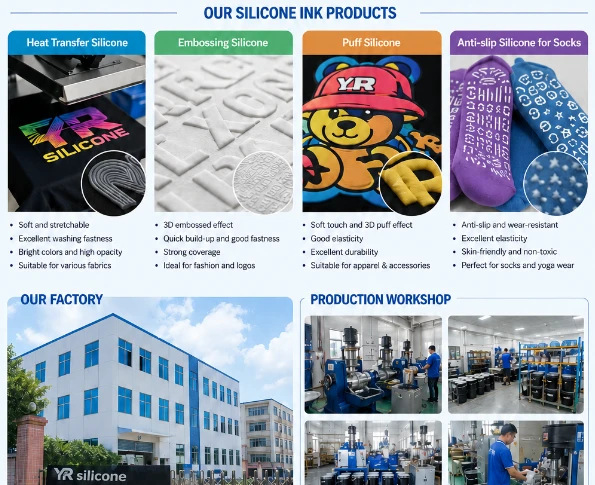
Stable Quality & Reliable Supply
XG Silicone operates a 10,000-square-meter production facility equipped with professional manufacturing machinery and quality control testing equipment; our products hold certifications to ensure consistent performance.
Technical Support & Application Experience
We offer guidance on silicone ink selection, match curing conditions to your specific printing processes and material choices. Following delivery, we continue to provide technical support to help customers enhance printing efficiency, minimize production issues, and maintain consistent product quality.
FAQ About Sponge Foam Silicone Ink
What Is the Difference Between Sponge Foam Silicone and High-Density Silicone?
Both materials can create raised printing effects on textiles, but their formation methods are different. Traditional high-density silicone mainly builds thickness through printing layers, while sponge foam silicone develops a raised structure through foaming during curing. Sponge foam silicone is suitable for projects requiring a distinctive foamed 3D appearance and a firm final structure.
Will Sponge Foam Silicone Prints Collapse After Washing?
The stability of a finished 3D print depends on the silicone formulation, curing conditions, fabric compatibility, and printing process. When the material is properly applied and cured, its closed-cell structure helps maintain the raised appearance.
What Is the Minimum Order Quantity (MOQ) for Sponge Foam Silicone?
There is no fixed minimum order quantity.The supply quantity can be arranged according to customers' specific requirements, production needs, and purchasing plans. Please contact us to discuss your required quantity and application.
Does Your Company Provide Technical Support During Production?
Yes. We provide technical guidance and support to help customers address material application and printing-related problems.
Whether you need assistance with fabric compatibility, printing effects, or production adjustments, our team can help identify suitable solutions according to your specific requirements.
Hot Tags: sponge foam silicone: a solution for high-density 3d textile printing, suppliers, factory, custom, wholesale, buy, bulk, low price, in stock, free sample, made in China