


Screen printing ink cracking after drying is one of the most common problems faced by textile printers, apparel manufacturers, and printing companies.

A printed design may look perfect immediately after printing, but cracks can appear after drying, curing, washing, stretching, or long-term use.
Ink cracking not only affects product appearance but can also lead to:
- Customer complaints
- Product returns
- Production waste
- Increased manufacturing costs

Understanding why screen printing ink cracks after drying helps manufacturers improve printing quality, choose the right ink formulation, and optimize production processes.
Common causes include:
- Incorrect ink selection
- Improper curing conditions
- Excessive ink thickness
- Poor substrate preparation
- Low-quality ink formulation
This guide explains the main reasons behind screen printing ink cracking and how to prevent it.
What Does Screen Printing Ink Cracking Look Like?
Screen printing ink cracking usually appears as visible damage on the printed surface.
Common symptoms include:
1. Small Surface Cracks
Fine lines appear across the printed design after drying or curing.
2. Ink Peeling or Flaking
The ink layer separates from the fabric or substrate.
3. Cracking After Stretching
The print breaks when the material is bent, stretched, or washed.
4. Uneven Ink Film
The printed surface becomes rough, brittle, or inconsistent.
These issues indicate problems with ink flexibility, adhesion, or curing performance.
Main Reasons Why Screen Printing Ink Cracks After Drying
1. The Ink Layer Is Too Thick
One of the most common reasons for cracking is excessive ink deposit.
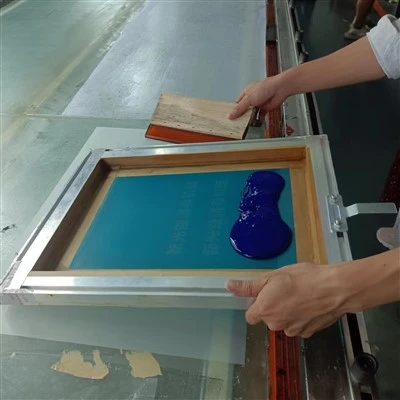
During printing, applying too much ink creates a thick film. When the ink dries, the surface and inner layers shrink at different speeds, creating internal stress.
This stress can cause:
- Surface cracks
- Brittle print areas
- Poor flexibility
Common causes:
- Incorrect mesh count
- Too much squeegee pressure
- Multiple unnecessary print passes
- Incorrect ink viscosity
Solution:
To prevent cracking:
- Use the correct screen mesh
- Control ink thickness
- Adjust squeegee pressure
- Maintain proper ink viscosity
2. Incorrect Drying or Curing Conditions
Proper curing is essential for screen printing ink performance.
If ink is not fully cured, solvents or moisture may remain trapped inside the ink film. Over time, this can cause cracking or peeling.
Common curing problems include:
- Temperature too low
- Insufficient curing time
- Uneven heat distribution
- Incorrect dryer settings
For textile printing, curing requirements depend on:
- Ink type
- Fabric material
- Ink formulation
Always follow the recommended curing parameters provided by the ink manufacturer.
3. Using the Wrong Ink for the Substrate
Different materials require different ink formulations.
Using unsuitable ink can cause poor flexibility and weak adhesion.
Examples:
| Substrate | Suitable Ink Consideration |
|---|---|
| Cotton fabric | Water-based textile ink or suitable plastisol ink |
| Polyester fabric | Polyester-compatible ink |
| Plastic materials | High-adhesion ink |
| Flexible materials | Elastic/flexible ink |
For example, using rigid ink on stretchable fabric can easily lead to cracking.
Solution:
Before mass production, test:
- Adhesion
- Stretch resistance
- Washing durability
- Surface compatibility
4. Poor Ink Adhesion to the Surface
Even high-quality ink can crack if it does not properly bond with the substrate.
Possible causes:
- Dust or oil contamination
- Dirty surface
- Low surface energy materials
- Lack of surface treatment
Solution:
Before printing:
- Clean the substrate
- Remove contaminants
- Use appropriate surface treatment if necessary
For plastic materials, treatments such as corona or plasma treatment can improve ink adhesion.
5. Incorrect Ink Mixing Ratio
Many screen printing inks require additives such as:
- Hardeners
- Reducers
- Catalysts
- Crosslinking agents
Incorrect mixing ratios can affect:
- Flexibility
- Drying speed
- Adhesion
- Durability
- Common mistakes:
- Adding too much thinner
- Incorrect hardener ratio
- Poor mixing consistency
Solution:
Always follow the manufacturer's technical instructions.
A professional screen printing ink supplier should provide:
- Mixing guidelines
- Technical data sheets
- Application recommendations
6. Low-Quality Ink Formulation
Ink quality has a direct impact on print durability.
- Low-quality inks may have:
- Poor resin systems
- Weak pigment dispersion
- Low flexibility
- Poor adhesion performance
High-quality screen printing inks use optimized formulations to achieve:
- Better elasticity
- Stronger adhesion
- Improved washing resistance
Choosing an experienced screen printing ink manufacturer can significantly reduce printing failures.
How To Prevent Screen Printing Ink From Cracking?
1. Select the Right Ink Type
Choosing ink according to the application is the first step.
Consider:
- Printing material
- Product usage
- Required durability
- Environmental requirements
Examples:
For premium apparel:
→ Water-based ink
For high-volume garment production:
→ Plastisol ink
For flexible materials:
→ Flexible ink formulation
2. Perform Ink Testing Before Production
Before large-scale production, conduct:
Adhesion Test
Checks whether ink bonds properly.
Wash Test
Evaluates durability after repeated washing.
Stretch Test
Determines flexibility performance.
Scratch Resistance Test
Measures surface durability.
Testing helps prevent costly production problems.
3. Optimize Printing Parameters
Production settings have a major influence on ink performance.
Important factors include:
| Parameter | Impact |
|---|---|
| Mesh count | Controls ink deposit |
| Squeegee pressure | Affects thickness |
| Printing speed | Influences ink transfer |
| Drying temperature | Determines curing quality |
| Ink viscosity | Affects print consistency |
4. Work With a Reliable Screen Printing Ink Manufacturer
A professional supplier can provide:
- Proper ink recommendations
- Customized formulations
- Technical support
- Quality consistency
For OEM customers, choosing a manufacturer with strong R&D capability can improve production efficiency and reduce defects.
How To Choose a Screen Printing Ink Manufacturer?
When sourcing screen printing ink suppliers, consider the following factors.
1. Technical Expertise
A reliable manufacturer should understand:
- Different substrates
- Printing processes
- Curing requirements
- Performance testing
2. Product Customization Capability
Many businesses require customized solutions, including:
- Custom colors
- Special finishes
- Flexible formulations
- Eco-friendly options
3. Quality Control System
Professional manufacturers should have:
- Raw material inspection
- Production testing
- Batch consistency control
- Performance evaluation
Recommended certifications and compliance documents:
- ISO certification
- REACH compliance
- RoHS testing
- SDS documentation
Frequently Asked Questions
Q: Why does my screen printing ink crack after washing?
A: Ink cracking after washing is usually caused by incomplete curing, poor adhesion, incorrect ink selection, or insufficient flexibility.
Q: Can adding thinner prevent screen printing ink from cracking?
A: No. Adding excessive thinner may weaken the ink film and actually increase cracking problems.
Q: How long should screen printing ink cure?
A: Curing time depends on ink type, substrate, and equipment. Always follow the manufacturer's recommended curing conditions.
Q: What is the best screen printing ink for flexible materials?
A: Flexible materials require inks with strong elasticity and adhesion properties. Specialized flexible screen printing inks are usually recommended.
Q: Is water-based ink less likely to crack?
A: Water-based ink can provide excellent flexibility when properly formulated and cured. However, cracking depends on ink quality, application, and printing conditions.
Conclusion
Screen printing ink cracking after drying is usually caused by problems related to ink selection, curing conditions, printing parameters, or substrate compatibility.
To achieve durable and high-quality prints, manufacturers should:
Select the correct ink formulation
Optimize curing processes
Test ink compatibility
Work with an experienced screen printing ink supplier
A reliable screen printing ink manufacturer can provide technical support and customized solutions to help businesses improve printing performance and reduce production issues.
Recommended External References
| Topic | External Link | Purpose |
|---|---|---|
| Printing industry standards | https://www.printing.org/ | Industry authority |
| Screen printing industry | https://www.sgia.org/ | Printing expertise |
| Chemical compliance | https://echa.europa.eu/ | REACH authority |
| RoHS regulations | https://environment.ec.europa.eu/topics/waste-and-recycling/rohs-directive_en | Compliance reference |
| Surface treatment | https://www.plasma.com/ | Technical reference |