



Stretch fabrics are widely used in modern apparel, including compression wear, leggings, sports bras, swimwear, elastic waistbands, and performance uniforms. Silicone screen printing is a popular decoration method for these materials because it provides a soft hand feel, good durability, and flexibility.
However, cracking is still a common challenge when printing silicone ink on elastic fabrics. A print that looks perfect immediately after curing may develop fine cracks, surface whitening, or even peeling when the fabric is stretched repeatedly.
This article explains four common causes of silicone ink cracking on stretch fabrics, how to identify each problem, and what printing factories can do to prevent it before mass production.
Insufficient Ink Elongation for the Fabric's Stretch Requirements

Different fabrics have different stretching capabilities. Standard polyester or cotton fabrics may require moderate flexibility, while spandex blends, compression fabrics, and elastic webbing can undergo much greater deformation during use.
If the cured silicone film cannot stretch as much as the fabric, tension builds up within the printed layer. Eventually, the silicone coating may develop fine cracks or break when the fabric is repeatedly stretched.
This problem is particularly noticeable in sportswear, elastic waistbands, and high-stretch webbing applications.
How to identify the problem
Perform a stretch test using a fully cured printed sample:
● Stretch the fabric gradually in its main stretch direction.
● Observe whether the silicone surface develops fine lines, whitening, or visible cracks.
● Release the tension and check whether the print returns to its original appearance.
● Repeat the test several times to evaluate its resistance to repeated stretching.
If the silicone film cracks before the fabric reaches its intended working stretch, the ink may not have sufficient elongation for the application.
How to fix it
Choose a silicone ink specifically developed for high-elastic fabrics rather than relying on a general-purpose formulation.
When selecting silicone ink, consider the following:
◆ Elongation: The cured silicone film should accommodate the fabric's expected deformation.
◆ Elastic recovery: The printed layer should recover after stretching without permanent deformation.
◆ Softness: A suitable formulation should maintain flexibility without creating an unnecessarily stiff print.
◆ Application compatibility: The ink should be suitable for the specific fabric, printing method, and final product.
Avoid excessive pigment loading or unnecessary additives, as these may affect the flexibility of the cured silicone film.
For applications involving spandex blends, compression garments, and elastic webbing, YRsilicone's XG-866AR-GT high-elasticity silicone is designed to provide excellent stretchability and recovery. Its reported elongation exceeds 400%, making it a potential solution for applications that require a highly flexible silicone print.
Incomplete Curing Weakens the Silicone Film
Silicone screen printing ink needs sufficient heat and curing time to develop its intended mechanical properties. Depending on the formulation, the curing process involves a chemical reaction that transforms the printed silicone into an elastic, durable film.
A surface that feels dry to the touch does not necessarily mean that the entire ink layer has cured properly.
When the silicone is under-cured, the printed film may have insufficient strength, uneven elasticity, or weak internal bonding. As a result, it can tear, crack, or deform when the fabric is stretched.
This problem can occur when production speed increases, the printed layer becomes thicker, or the actual fabric temperature is lower than expected.
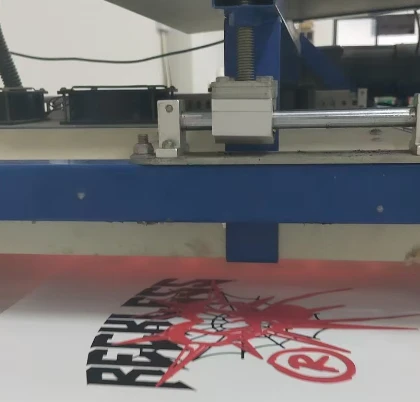
identify the problems
Surface condition: Check whether the printed surface feels tacky or remains unusually soft after curing.
Internal curing: Examine a cross-section of the printed layer if the coating is relatively thick.
Stretch performance: Stretch the cured sample and observe whether the silicone film tears instead of deforming smoothly.
Temperature verification: Use an appropriate temperature-measuring device to check the actual fabric temperature rather than relying only on the dryer's display.
what should we do?
Follow the recommended curing temperature and time provided by the silicone ink supplier.
Adjust conveyor speed according to the actual heating conditions.
Consider fabric thickness, ink deposit, and the number of printed layers when setting curing parameters.
Verify the curing result through stretch and adhesion tests before starting mass production.
For heat-sensitive fabrics, especially those containing elastic fibers or disperse-dyed polyester, curing conditions should also be selected carefully to avoid fabric deformation or dye migration. The goal is not simply to increase the oven temperature. It is to achieve complete and consistent curing while maintaining the fabric's original properties.
Excessive Ink Thickness Causes Stress Concentration

Thick silicone prints are widely used to create raised logos, three-dimensional effects, and high-density designs.
However, applying too much silicone ink in a single printing pass can increase the risk of cracking, particularly on highly elastic fabrics.
A thick silicone layer may not deform as evenly as a thinner, more flexible coating. When the fabric stretches, stress can concentrate around raised areas, sharp design edges, and other sections where the ink deposit is uneven.
If the printed layer is too thick or the curing conditions are insufficient, differences in curing between the surface and the interior may further affect the coating's flexibility and structural stability.
identify the problem
Pay attention to the location and appearance of the cracks:
Cracks mainly appear in raised or high-density sections.
Fine cracks develop around the edges of thick printed patterns.
Some areas feel harder or stiffer than others.
The printed design loses flexibility when the fabric is stretched.
For a more detailed inspection, cut through the printed sample and examine the cross-section to check whether the silicone layer has cured evenly.
How to avoid it
≮ Use multiple thin passes: Build the required height gradually to improve coating uniformity.
≮ Control ink deposit: Adjust mesh count, screen tension, and squeegee pressure to achieve a consistent print thickness.
≮ Optimize intermediate drying: Allow each layer to stabilize sufficiently before applying the next one.
≮ Avoid excessive heat exposure: Follow the supplier's recommended process to prevent unnecessary changes to the previous layer.
≮ Test the final structure: Evaluate the complete printed design rather than testing individual layers only.
Poor Fabric Adhesion Causes Cracking and Delamination
For silicone ink to perform properly, it must bond securely to the fabric surface. If the adhesion is insufficient, the printed layer may separate from the substrate when the fabric stretches.
This creates stress at the interface between the silicone film and the fabric, potentially resulting in edge lifting, peeling, or localized cracking.
The problem is particularly common with certain nylon fabrics, waterproof polyester, and elastic materials that have received special surface treatments.
Fabric finishing agents, lubricating oils, water-repellent coatings, and other surface residues can interfere with the bonding process.
How to identify the problem
Tape adhesion test: Apply adhesive tape to the cured print and remove it to check whether silicone transfers onto the tape.
Cross-hatch test: Cut a small grid into the printed coating, apply tape, and inspect whether any sections detach.
Stretch-and-peel test: Stretch the fabric and observe whether the edges of the silicone print lift from the substrate.
Fabric surface inspection: Check whether the material contains visible contamination or has received special finishing treatments.
How to fix it
First, make sure the fabric surface is clean and suitable for silicone printing. For difficult substrates, such as nylon, waterproof polyester, and fabrics with special finishing treatments, a suitable silicone primer may be necessary. For example:
XG-110A / XG-110B primer:
Can be considered for applications requiring improved adhesion to certain difficult substrates, including waterproof nylon. The appropriate formulation should be confirmed through fabric testing.
XG-180A-1 primer/base silicone:
Can be used as a bridging layer on selected fabrics where an additional bonding layer is needed to improve the stability of the silicone printing system.
The correct primer depends on the fabric composition, surface treatment, and printing process. Always test the complete printing system on the actual production fabric before proceeding with bulk orders.
Quick Diagnostic Checklist: How to Prevent Silicone Ink Cracking Before Mass Production
Before starting large-scale production, printing factories should evaluate the following factors:
| Check Item | Expected Condition | Potential Warning Signs |
|---|---|---|
| Ink elongation | Suitable for the fabric's intended stretch range | Whitening or cracking during stretching |
| Elastic recovery | Printed layer returns to its original condition | Permanent deformation after stretching |
| Curing | Consistent curing according to supplier recommendations | Tackiness, tearing, or weak film strength |
| Ink thickness | Uniform coating with controlled ink deposit | Cracks concentrated in thick or raised areas |
| Fabric adhesion | Strong bonding between silicone and substrate | Edge lifting, peeling, or ink transfer during tape testing |
| Catalyst mixing | Correct ratio, accurate weighing, and thorough mixing | Uneven curing or inconsistent print performance |
A practical approach is to prepare several printed samples using different process settings. Compare their stretch performance, adhesion, and final appearance before selecting the most suitable production parameters.
Testing on the actual fabric is particularly important because different fabric suppliers and finishing treatments can produce different printing results.
Frequently Asked Questions (FAQ)
1. Why does silicone ink crack when printed on spandex fabrics?
The most common reason is insufficient elongation of the cured silicone film. If the ink cannot stretch along with the spandex fabric, tension builds up and eventually causes cracking. Incomplete curing and poor adhesion can also contribute to the problem.
2. How can I test the stretchability of silicone screen printing ink?
Print and fully cure a sample on the actual production fabric. Gradually stretch the fabric in its main stretch direction and observe whether the silicone film develops cracks, whitening, or permanent deformation. Repeat the test to evaluate its recovery performance.
3. Does thicker silicone printing increase the risk of cracking?
It can. Excessive ink thickness may increase stress concentration and make the printed layer less flexible. Multiple controlled printing passes are generally preferable to applying an unnecessarily thick layer in a single pass.
4. Do I need a primer when printing silicone ink on elastic fabrics?
Not always. Primer requirements depend on the fabric composition, surface treatment, and adhesion properties of the silicone ink. Some fabrics may allow direct printing, while nylon, waterproof polyester, and specially treated materials may require an appropriate primer.
5. Which silicone ink is suitable for high-elastic sportswear and webbing?
Choose a silicone ink with high elongation, good elastic recovery, and suitable adhesion to the target fabric. YRsilicone's XG-866AR-GT is designed for high-elastic applications such as sportswear and elastic webbing. Sample testing is recommended before mass production.