



After printing and heat curing, the original color of the fabric may migrate into the printed layer, causing white or light-colored designs to become discolored. This problem is particularly noticeable when printing on dark-colored or sublimated polyester fabrics.
For manufacturers using silicone ink for textile printing, dye migration can affect the final appearance, product consistency, and overall production quality. Choosing suitable printing materials and using the correct layer structure are therefore essential.
In this article, we will explain why dye migration occurs in polyester printing, how to reduce the risk, and how sublimation-resistant silicone can help protect printed colors.
Why Does Dye Migration Occur in Polyester Printing?
What Is Dye Migration?

Dye migration refers to the movement of dye molecules from a dyed fabric into an applied printing layer. In polyester textiles, this problem is commonly associated with disperse dyes, which are widely used to color polyester fibers.
When polyester fabric is exposed to heat during printing, drying, or curing, some dyes may become mobile. They can move from the fibers toward the surface and enter the printed material above the fabric.
As a result, the printed design may gradually change color. For example, a white silicone print on red polyester fabric may develop a pinkish appearance, while a light-colored design on black or dark-blue fabric may become grayish or contaminated by the background color.
Main Causes of Dye Migration
Heat Exposure During Curing
Heat is one of the major factors associated with dye migration. During silicone printing and heat transfer production, fabrics and printed layers may be exposed to elevated temperatures. If the fabric contains heat-sensitive disperse dyes, some of these dyes may migrate toward the surface under certain processing conditions.
Dye Characteristics of Polyester Fabrics
Different polyester fabrics may have different dye compositions and thermal stability. Even fabrics with similar colors may behave differently during printing. Their dyeing processes, dye concentrations, and finishing treatments can all influence the possibility of migration.
Dark-Colored and Sublimated Fabrics
Dark polyester fabrics and sublimated polyester materials often require additional attention. Dark fabrics may contain a relatively high concentration of dyes, while sublimation printing uses disperse dyes that are transferred into polyester fibers through heat. Under certain subsequent heating conditions, these dyes may migrate and affect the appearance of silicone printing layers.
Incompatible Printing Materials and Layer Structures
If the printing structure does not provide sufficient protection against migrating dyes, color contamination may occur during or after heat exposure.
For light-colored silicone prints on dyed polyester, selecting suitable materials and designing an appropriate printing structure are especially important.
What Problems Can Dye Migration Cause?
Dye migration can create several quality issues for garment manufacturers and printing factories.
Discoloration of white and light-colored prints:
The original print color may become pink, gray, blue, or another shade influenced by the fabric dye.
Contaminated graphic colors:
The printed design may no longer match the approved color sample.
Inconsistent production batches:
Different fabric lots may show different migration behavior, making color consistency difficult to control.
Rework and product rejection:
Discolored garments may need additional processing or may fail the customer's quality inspection.
Higher production costs:
Material waste, extra testing, delayed delivery, and rejected orders can increase manufacturing costs.
For manufacturers producing sportswear, team uniforms, and promotional garments, controlling dye migration is an important part of maintaining consistent print quality.
How to Prevent the Sublimation Phenomenon from Occurring
Preventing dye migration requires a combination of suitable materials, controlled processing conditions, and proper pre-production testing. For buyers sourcing silicone inks for polyester garments, the following considerations are particularly important.
Choose Silicone Materials with Anti-Migration Properties
One of the most effective approaches is to use an anti-migration silicone as a base layer before applying the subsequent silicone printing layers. Unlike ordinary silicone ink, an anti-migration material is designed to serve as a functional barrier between the dyed polyester fabric and the upper silicone print.
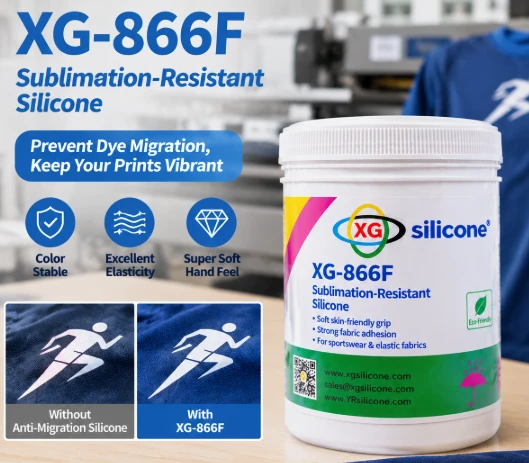
The barrier layer helps reduce the movement of fabric dyes into the subsequent silicone layers, protecting the appearance of white, light-colored, and other printed colors.
This is especially useful for:
● White silicone printing on dark polyester fabrics.
● Multi-color silicone printing on sportswear.
● Silicone logos and decorative patterns on polyester garments.
● Applications requiring consistent print colors across large production batches.
When purchasing silicone materials, buyers should confirm whether the supplier offers an anti-migration solution specifically intended for polyester printing.
Control Heat Curing Conditions
Even when using suitable printing materials, heat management remains essential.
Printing factories should consider the following points:
● Avoid unnecessary excessive heat exposure during drying and curing.
● Adjust curing temperature and time according to the silicone manufacturer's technical recommendations.
● Check the actual temperature experienced by the printed fabric rather than relying only on the machine's displayed setting.
● Consider the combined heat exposure from multiple printing and curing stages.
● Allow printed garments to cool properly before stacking them.
It is important to remember that simply lowering the curing temperature is not always the correct solution. If the temperature is too low, the silicone may not cure completely, potentially affecting adhesion, durability, and washing performance.
How Does the Sublimation-resistant Silicone Layer Work?
The sublimation-resistant silicone barrier layer is an important part of the printing system when working with polyester fabrics that are prone to dye migration.
Instead of applying the final silicone color directly onto the dyed fabric, manufacturers first print a functional base layer to help reduce the upward movement of dyes.
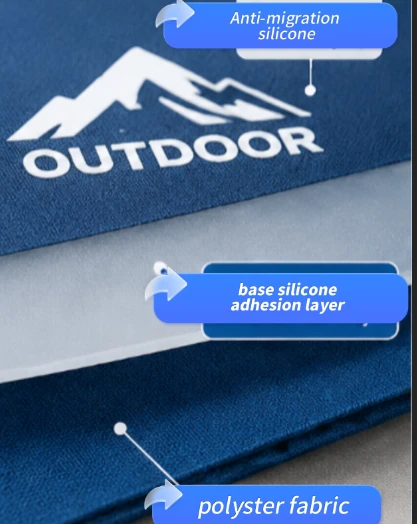
The sublimation-resistant silicone is a specialized silicone printing material used as a base layer between the polyester fabric and the subsequent silicone print.
Its primary purpose is to help prevent disperse dyes from migrating out of the fabric and contaminating the upper silicone layers during heat exposure.
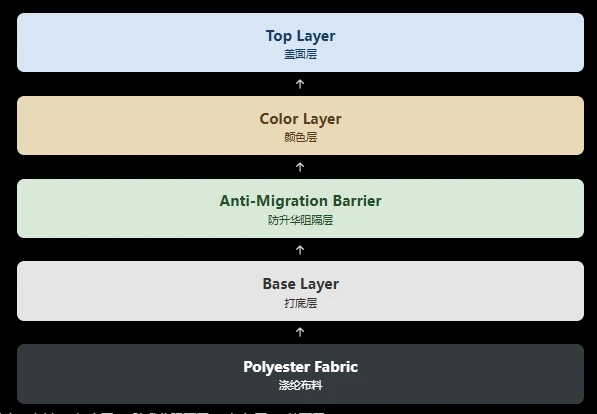
In a typical printing structure, the arrangement is:
Polyester Fabric → Base Silicone→ Anti-Migration Silicone Layer → Colored Silicone Print
By introducing this functional layer, manufacturers can reduce direct contact between the dyed fabric and the final printed colors.
This is particularly important for white and light-colored silicone prints, where even slight dye contamination may be visible.
Step 1: Print the anti-migration silicone base layer
Apply the anti-migration silicone directly onto the polyester fabric as the first functional layer.
Step 2: Dry or cure the base layer
Follow the supplier's recommended processing instructions to prepare the base layer for subsequent printing.
Step 3: Apply the required silicone colors
Print the white, colored, or other silicone materials over the prepared base layer to create the required design.
Step 4: Complete the final curing process
Follow the recommended curing conditions for the complete printing system.
The exact printing sequence, layer thickness, and curing parameters should be determined through sample testing and technical guidance from the material supplier.
Conclusions
Prevent Color Problems Before Mass Production
Color changes in silicone prints on polyester fabrics are often related to dye migration during or after heat curing. However, fabric dye quality, processing conditions, and the compatibility of printing materials can all influence the final result.
For garment manufacturers and screen-printing factories, the best approach is to address the problem before mass production rather than attempting to correct discolored prints afterward.
Selecting a suitable sublimation-resistant silicone as a base layer, controlling heat exposure, and conducting sample tests on actual polyester fabrics can help reduce the risk of dye contamination and improve printing consistency.
At XGsilicone, we provide XG-866F Sublimation-resistant Silicone for polyester printing applications. It is designed to work as a barrier layer, helping reduce the impact of fabric dye migration on the color appearance of subsequent silicone prints.
If you are experiencing color changes in silicone printing on polyester fabrics, you can contact our team to discuss your application requirements, request material samples, and receive technical support for your printing process.
Q2: Does dye migration only happen on dark-colored polyester fabrics?
No. Although dark-colored polyester fabrics often present a greater visual risk, dye migration can also occur on light-colored polyester materials.
The actual risk depends on the dye formulation, dyeing quality, fabric processing history, and heat exposure.
Q3: Can reducing the curing temperature completely prevent dye migration?
Not necessarily. Lowering unnecessary heat exposure can help reduce dye migration, but it does not guarantee that the problem will disappear.
The silicone must also receive sufficient heat to achieve proper curing. A suitable balance between curing performance and dye migration control is essential.
Q7: Does the thickness of the Sublimation-resistant Silicone layer affect its performance?
Yes. The application amount and layer thickness may influence the barrier performance. An insufficient coating may not provide adequate protection against dye migration, while an unnecessarily thick layer may affect printing efficiency and the overall print structure.
The appropriate printing thickness should be determined through sample testing and adjusted according to the fabric characteristics and supplier's technical recommendations.
Q6: Can Sublimation-resistant Silicone be used on all types of polyester fabrics?
Not necessarily. Different polyester fabrics may use different disperse dyes and dyeing processes, which can affect their resistance to dye migration.
Anti-migration silicone is designed to help reduce dye migration, but its performance may vary depending on the fabric and production conditions. Buyers should test the material on their actual polyester fabrics before mass production.