


Silicone ink can achieve a variety of different processes and effects on clothing, including:
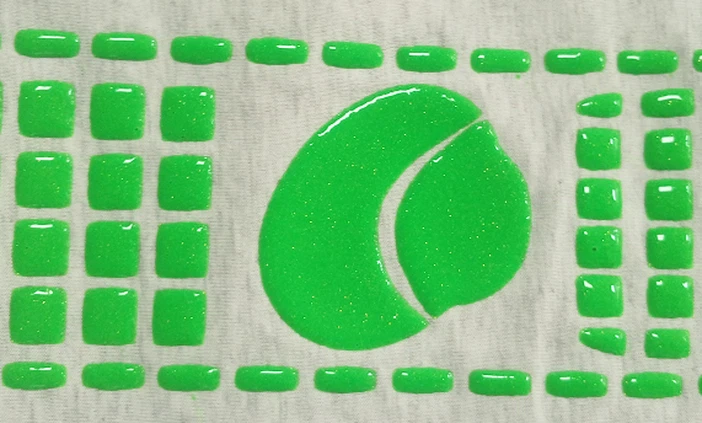
1,Pour Printing: Pour printing is a common silicone ink application that creates raised, three-dimensional graphics or logos. This process is often used on T-shirts, hats, shoes and other clothing to add tactile and visual appeal.
2,Thermal transfer printing: Silicone ink can be applied to garments through the thermal transfer printing process. This allows the creation of fine patterns and logos on various types of textiles while ensuring wear and wash resistance.
3,Screen Printing: Screen printing is a common printing process that uses silicone ink to achieve high-quality printing results. It is often used to create logos, patterns and decorative elements.
4,Digital Printing: Digital printing technology can also be used in conjunction with silicone inks to achieve complex patterns and images on garments. This process is suitable for individualization and small batch production.
5,Light and thermal effects: Silicone inks can add special effects such as light (glows in the dark) and thermal (color changes with temperature) to provide a unique look and experience.
6,Color Mixing: Silicone inks can be mixed to create a variety of colors and effects. This allows designers to experiment and achieve different looks.
7,3D Patterns: Silicone ink can be used to create 3D patterns such as raised text, graphics or images. This adds texture and visual appeal to the garment.
8,Temperature-sensitive effect: Some silicone inks have temperature-sensitive properties that can change color or appearance at different temperatures. This is very interesting in specific applications, such as for theatrical performance costumes.
The versatility and durability of silicone ink make it a powerful tool for creating innovative and attractive garments. Designers and manufacturers can achieve unique clothing designs by combining different processes and effects to meet the needs of different customers.


