



Basic Principle
One‑component silicone ink (RTV‑1, moisture‑cured):Ready‑to‑use out of the container. It cross‑links by absorbing moisture from ambient air. No curing agent mixing is required, and it cures at room temperature without oven heating.
Two‑component platinum‑cured silicone ink (A+B addition‑cure):Consists of base silicone (Part A) and platinum catalyst (Part B). Full cross‑linking is triggered by heating after precise mixing. It is the mainstream material for mass textile screen‑printing production.
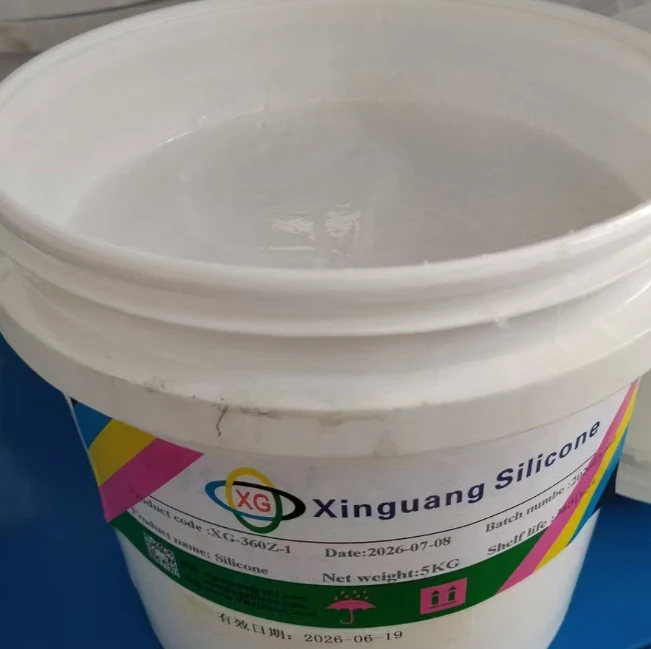
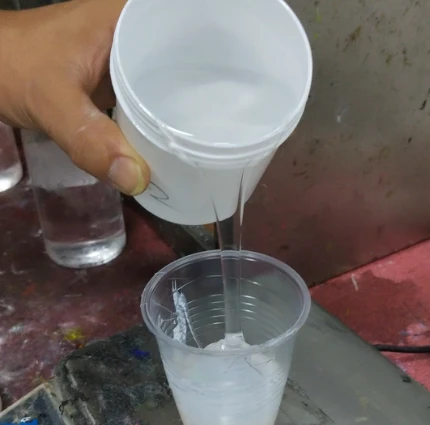
| Item | One‑Component Silicone Ink | Two‑Component Silicone Ink |
|---|---|---|
| Curing Condition | Room‑temperature moisture cure. Surface dries fast, yet full curing takes 24‑72 hours. Poor cure under low‑humidity conditions; thick layers hard to cure thoroughly | Heat‑cured at 80‑150℃. Cures uniformly from surface to core, even for thick deposits. Cure speed adjustable for production lines |
| Physical Performance | Fair elasticity. Moderate wash‑resistance and abrasion resistance. Limited anti‑yellowing & weather resistance. Thick prints risk incomplete inner cure | ✅ Excellent elasticity, tear strength, wash fastness, abrasion resistance, UV‑resistance and anti‑yellowing. Low shrinkage, stable print quality for long‑term outdoor applications |
| Adhesion | Works for some heat‑sensitive substrates. Less reliable adhesion for heavy‑deposit printing | Great adhesion on fabric, webbing, leather and heat‑transfer films. Best performance with proper primer, ratio and baking settings |
| Storage & Waste | Strict sealing required. Short shelf‑life once opened. Higher waste due to screen skinning | Unmixed A & B parts enjoy long shelf‑life. Waste only occurs after mixing; lower overall loss for mass orders |
| Typical Applications | Small‑batch sampling, heat‑sensitive substrates, workshops without ovens, thin‑layer printing | Apparel printing, webbing coating, drawcord dipping, heat transfer, leather screen‑printing, high‑volume manufacturing, thick 3D prints, outdoor‑grade finished goods |
| Main Limitations | Not suitable for thick deposits; unreliable cure in dry climate; not optimized for mass‑production lines; limited weathering performance | Requires oven equipment. Incorrect mixing ratio causes sticky / under‑cured prints. Cannot apply to heat‑vulnerable materials |
Selection Guide
Choose one‑component ink for small‑batch sampling, substrates that cannot sustain high heat, or factories without curing ovens.
Choose two‑component platinum‑cured silicone ink for mass‑production, high washing fastness, thick 3D prints and outdoor‑end‑use products.
Frequently Asked Questions
Q: Can one‑component silicone ink achieve high wash fastness?
A: It can reach moderate wash resistance for thin prints. For strict repeated‑washing requirements, two‑component platinum‑cured silicone delivers far more stable performance.
Q: Is oven mandatory for two‑component screen‑printing silicone?
A: Yes. Heat is required to complete platinum cross‑linking. Without sufficient baking, prints remain tacky and show poor adhesion & abrasion performance.
Q: Why does one‑component ink skin quickly on screen?
A: Its curing reaction is triggered by air moisture. Once exposed to air, surface cross‑linking proceeds rapidly. Avoid leaving ink on screen for extended periods.