


For garment manufacturers, printing factories, and silicone ink buyers, understanding these differences is essential before placing a bulk order. This guide explains the main factors to consider when selecting high-density silicone ink, compares materials for different printing setups, and provides practical testing recommendations to help buyers find a suitable solution for their production requirements.
What Factors Should Buyers Consider Before Selecting High-Density Silicone Ink?
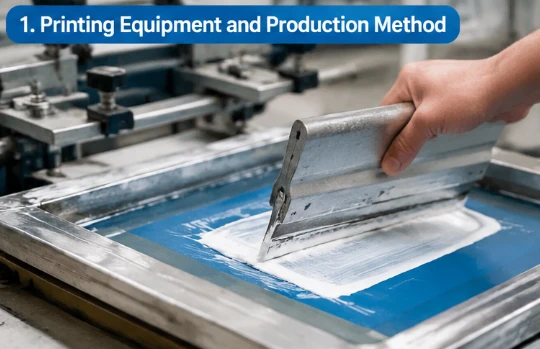
Printing Equipment and Production Method
Manual screen printing: Operators have more control over printing pressure and screen movement. The ink should provide suitable workability while allowing the required printing layers to be completed efficiently.
Semi-automatic screen printing: The material needs to maintain consistent performance across repeated printing cycles. Stable working time and predictable surface drying are important.
Automatic screen printing: Continuous production requires a formulation with suitable working time, printing consistency, and compatibility with the machine's operating speed.
Buyers should communicate their printing method to the silicone ink supplier before selecting a product. This helps reduce problems caused by using a formulation that does not match the production setup.
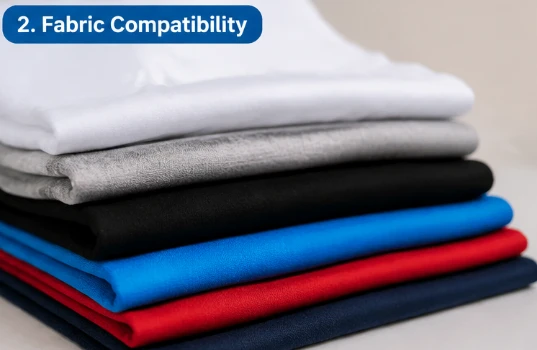
Fabric Compatibility
Fabric composition affects silicone adhesion, flexibility, and the final appearance of the printed layer.
Common application materials include:
Cotton and cotton blends: These fabrics are widely used in casual clothing and garment printing. Buyers should evaluate adhesion and the softness of the finished print.
Polyester fabrics: Common in sportswear and promotional garments. Silicone ink selection should consider fabric surface characteristics and possible dye migration during heat curing.
Nylon fabrics: Often used in functional clothing and accessories. Some nylon materials have relatively difficult bonding characteristics and may require a suitable primer.
Stretchable fabrics: Used in sportswear, leggings, and elastic garments. The printed silicone layer should maintain sufficient elasticity to avoid cracking during stretching.
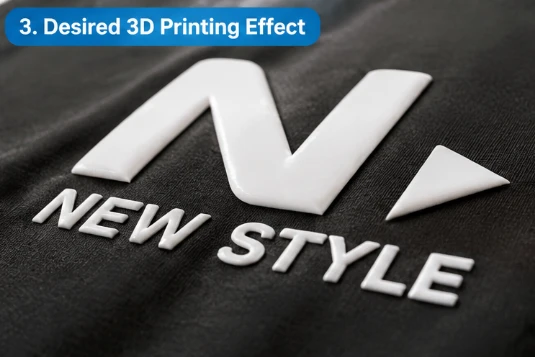
Desired 3D Printing Effect
The required surface appearance is another important selection factor. Different buyers may want different results:
Raised logos: Suitable for brand names, clothing labels, and decorative graphics.
Thick and structured designs: Used when a more noticeable three-dimensional effect is required.
Smooth and defined edges: Important for logos and detailed patterns that need a clean appearance.
Soft-touch raised prints: Suitable for garments where the printed area should maintain a comfortable hand feel.
The final effect depends on several factors, including ink formulation, screen specifications, printing layers, mesh selection, and curing conditions.
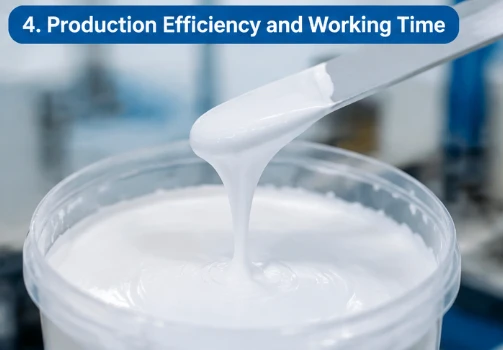
Production Efficiency and Working Time
Working time is particularly important for factories handling large orders.
If silicone ink begins to dry too quickly during printing, it may affect screen transfer, increase cleaning frequency, and make multi-layer printing more difficult.
On the other hand, a formulation with a longer working time may be more suitable for continuous printing operations, depending on the machine setup and curing process.
The catalyst ratio, ambient conditions, production speed, and material formulation can all influence working time.
Therefore, buyers should evaluate not only the printing result but also how the material performs throughout the actual production process.
Common Problems Caused by Choosing the Wrong High-Density Silicone Ink
Silicone Ink Dries Too Quickly During Printing
If the silicone ink dries too quickly, it may affect the printing process, especially when multiple layers are required.
Possible causes include:
● The formulation is not suitable for the printing method.
● The catalyst ratio is inappropriate.
● The working environment is too hot.
● The material remains exposed for too long during production.
Recommended solution:
Choose a formulation that matches the production method and follow the manufacturer's recommended catalyst ratio. For continuous production, buyers should pay particular attention to the material's working time under actual factory conditions.
Working Time Is Too Short for Continuous Production
In automatic screen printing, frequent interruptions can affect production efficiency. If the material's working time is insufficient for the machine's operating cycle, the factory may experience inconsistent printing performance.
Recommended solution:
Inform the supplier about the machine type, production speed, and expected operating time. A formulation designed for longer working time may be more suitable for continuous production.
Uneven Printing Thickness and Inconsistent 3D Effects
Uneven thickness can make raised logos look irregular. Some printed areas may appear higher than others, while edges may become rough or poorly defined.
Possible causes include:
● Inconsistent printing pressure.
● Unsuitable screen mesh specifications.
● Uneven material transfer.
● Incorrect printing layer arrangements.
● Inconsistent curing conditions.
Recommended solution:
Check the screen specifications, printing pressure, number of printing layers, and drying process. Buyers should also test the ink on their actual printing equipment rather than relying only on laboratory samples.
Poor Adhesion on Certain Fabrics
A high-density silicone ink may produce an attractive surface effect but still have poor adhesion to certain fabrics.
This can happen because of differences in fabric composition, surface treatment, water-repellent coatings, or other finishing chemicals.
Recommended solution:
Conduct adhesion tests using the actual fabric. For difficult-to-bond materials, a suitable silicone primer may be necessary to improve the bonding between the textile substrate and the silicone printing layer.
The Printed Layer Becomes Too Stiff or Cracks During Stretching
A thick silicone layer does not automatically provide good elasticity. If the printed material is too rigid or incompatible with the fabric's stretching requirements, cracks may appear when the garment is stretched repeatedly.
This is especially important for sportswear, elastic fabrics, and fitted garments.
Recommended solution:
Evaluate the elasticity and hand feel of the finished print. For stretchable textiles, select a silicone formulation designed for the required flexibility and test the printed fabric under realistic stretching conditions.
Manual vs. Automatic Printing: Which High-Density Silicone Ink Is More Suitable?
One of the most important considerations when selecting high-density silicone ink is whether the material is designed for manual or automatic printing.
Although both production methods can create raised silicone graphics, their operating requirements are different.
For different production requirements, YRsilicone offers high-density silicone solutions such as XG-866AH and XG-866A. These materials can be considered for different printing setups, with final selection depending on actual machine conditions and sample testing.
| Comparison | XG-866AH | XG-866A |
|---|---|---|
| Main application direction | Manual and semi-automatic printing | Automatic printing |
| Production consideration | Faster production rhythm and layer-building operations | Longer working time for continuous operations |
| Main selection focus | Surface drying and multi-layer printing | Working time and production consistency |
| Catalyst | XG-866B-2 | XG-866B-1 |
| Recommended evaluation | Layer formation and printing efficiency | Continuous printing stability |
The two materials should not be selected based on model names alone. Buyers should consider their printing equipment, production requirements, and target fabric.
For customized applications, communicating with the silicone ink manufacturer before purchasing can help identify a more suitable formulation.
How to Work with a Silicone Ink Manufacturer to Get the Right Solution
Choosing the right material is not only about comparing product specifications. Working with an experienced silicone ink manufacturer can also help reduce trial-and-error during production.
Before requesting a quotation or sample, buyers should provide the following information:
1. Fabric Type
Specify whether the material is cotton, polyester, nylon, elastic fabric, or a blended textile. If possible, provide a fabric sample.
2. Printing Equipment
Explain whether the factory uses manual, semi-automatic, or automatic screen printing machines.
3. Desired Printing Effect
Provide reference images or physical samples showing the required printing thickness, surface appearance, and hand feel.
4. Production Requirements
Describe the expected production speed, printing layers, and curing equipment.
5. Performance Requirements
Specify whether the finished print needs high elasticity, strong adhesion, washing resistance, abrasion resistance, or other special properties.
With this information, the manufacturer can better evaluate the application and recommend a suitable silicone formulation.
Why Choose YRsilicone for High-Density Silicone Ink?
YRsilicone has been developing and manufacturing silicone printing materials since 2007, providing solutions for textile printing, garment decoration, footwear materials, and other industrial applications.
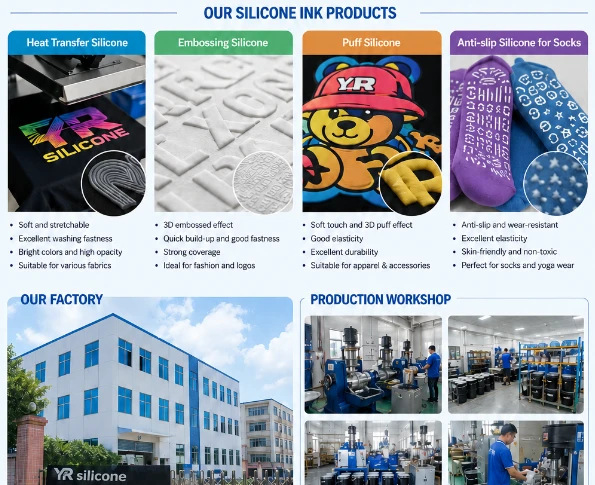
For high-density silicone printing, different formulations can be considered according to printing equipment and production requirements.
The company also provides:
Sample Support: Customers can request silicone ink samples for preliminary testing before placing an order.
Customized Formulations: Materials can be adjusted according to specific fabric types, printing methods, and application requirements.
Technical Assistance: Technical support is available to help customers address material application and printing process issues.
Flexible Ordering: Each material is supplied in 20 kg buckets, with no minimum order quantity requirement.
Rather than recommending the same material for every factory, YRsilicone focuses on understanding the customer's actual production conditions and helping identify an appropriate silicone solution.
FAQ About High-Density Silicone Ink
What Is the Difference Between Manual and Automatic High-Density Silicone Ink?
The main difference is the production requirements. Manual printing generally emphasizes workability and suitable surface drying between layers, while automatic printing requires stable performance and sufficient working time for continuous operation.
Can High-Density Silicone Ink Be Printed on Polyester and Nylon Fabrics?
Yes, high-density silicone ink can be used for different textile materials, including polyester and nylon. However, fabric surface treatments and material composition can affect adhesion.
Testing on the actual fabric is recommended. Some difficult-to-bond materials may require a suitable primer.
Why Does High-Density Silicone Ink Dry Too Quickly During Printing?
Possible reasons include an unsuitable formulation, an incorrect catalyst ratio, high ambient temperature, or excessive exposure during production.
Check the recommended mixing ratio and working conditions. If the problem continues, consult the manufacturer about selecting a more suitable formulation.
Can I Test Silicone Ink Samples Before Placing a Bulk Order?
Yes. YRsilicone can provide samples according to customer requirements, allowing buyers to evaluate printing compatibility, adhesion, thickness, and final appearance before purchasing larger quantities.