



Can you screen print on leather? Yes. Both genuine leather and synthetic leather can be screen printed, provided that the ink is compatible with the substrate and the printing process is properly controlled. In this guide, we explain how to choose suitable ink, prepare leather, complete the printing process, and prevent common problems such as peeling and cracking.
Can You Screen Print on Leather?
Yes, screen printing is possible on both genuine and synthetic leather. However, the printing result depends on the leather's surface finish, coating, texture, and flexibility. Before production, the ink should be tested on the actual leather material to ensure proper adhesion and durability.
Leather is different from ordinary textile fabrics. Some leather surfaces are porous and absorbent, while others have protective coatings that make them smooth and relatively non-absorbent.
What Types of Leather Can Be Screen Printed?
Genuine leather, PU leather, and PVC leather can all be considered for screen printing. However, their surface characteristics differ, so each material requires an appropriate ink selection and compatibility test.
| Leather Type | Surface Characteristics | Printing Considerations |
|---|---|---|
| Genuine Leather | Natural texture and varying absorbency | Check surface oils, finishes, and consistency |
| PU Leather | Polyurethane surface coating | Evaluate coating adhesion and ink compatibility |
| PVC Leather | Relatively dense synthetic surface | Check compatibility and possible plasticizer effects |
For example, PU leather may have a smooth protective coating that prevents certain inks from bonding properly. Genuine leather may have natural variations in texture and surface treatment. Therefore, testing different leather types before mass production is essential.
What Makes Some Leather Surfaces Difficult to Print On?
Waxed, oily, heavily coated, or uneven leather surfaces can make ink transfer and adhesion less predictable. Identifying these surface conditions before printing helps manufacturers choose suitable cleaning methods, primers, and ink formulations.
Common challenges include:
◆ Waxed leather: Wax can prevent ink from making proper contact with the surface.
◆ Oily leather: Surface oils may interfere with ink adhesion.
◆ Heavily coated leather: Protective coatings can create a barrier between the ink and substrate.
◆ Textured leather: Uneven surfaces may cause inconsistent ink coverage.
What Is the Best Ink for Screen Printing on Leather?
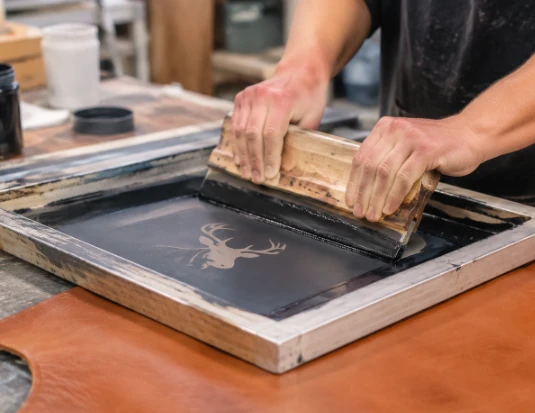
The best ink for screen printing on leather depends on the substrate, surface coating, and final product requirements.
Solvent-based, UV-curable, and specially formulated water-based inks may suit different applications. Buyers should prioritize adhesion, flexibility, curing requirements, and resistance to expected use conditions.
There is no single ink suitable for every leather material. An ink that performs well on one PU surface may not provide the same results on another synthetic leather with a different coating.
What Types of Ink Are Suitable for Leather Screen Printing?
Different ink systems offer different performance characteristics. The most suitable option should be selected according to the leather surface and the required printing effect.
| Ink Type | Main Characteristics | Important Considerations |
|---|---|---|
| Solvent-Based Ink | Suitable for certain coated and synthetic surfaces | Solvent compatibility, drying, and safety |
| UV-Curable Ink | Cures through ultraviolet light | UV curing conditions and surface adhesion |
| Water-Based Ink | Available in specially formulated systems | Drying conditions and substrate compatibility |
| Specialty Silicone Ink | Can provide flexible or distinctive surface effects | Requires verified adhesion to the specific leather coating |
For silicone ink, buyers should pay particular attention to substrate compatibility. Silicone inks are widely used in textile printing, but this does not automatically mean that every textile silicone formulation is suitable for genuine leather, PU leather, or PVC leather.
At YRsilicone, we recommend evaluating the actual substrate and intended application before selecting a silicone ink solution.
Do You Need a Primer for Screen Printing on Leather?
A primer may improve ink adhesion when the leather surface is difficult to bond with, but it is not necessary for every application. Comparing direct-printing samples with primed samples helps determine whether an additional bonding layer is required.
Before using a primer, consider:
◆ Whether the leather has a protective surface coating.
◆ Whether the selected ink can bond directly to the substrate.
◆ Whether the primer is compatible with both the leather and printing ink.
◆ Whether the additional layer affects flexibility or appearance.
A simple comparison test can help manufacturers avoid unnecessary production steps.
How Do You Screen Print on Leather Step by Step?
A reliable leather screen printing process involves inspecting and cleaning the material, preparing the screen, selecting compatible ink, applying controlled printing pressure, and completing suitable curing. Each stage should be evaluated using the actual leather to achieve consistent printing results.
How Do You Screen Print on Leather Step by Step?
Before printing, identify the leather finish, clean the surface using a compatible method, and allow it to dry completely.
Recommended preparation steps:
① Inspect the leather for dust, grease, wax, or surface damage.
② Select a cleaning method suitable for the leather coating.
③ Avoid aggressive solvents that may damage or discolor the material.
④ Allow the leather to dry before printing.
Do not assume that stronger cleaning agents will produce better results. Some solvents can damage PU coatings or change the appearance of finished leather.
How Do You Prepare the Screen and Apply Ink?
During printing, control the squeegee angle, pressure, and speed to achieve even ink transfer without excessive ink buildup.
Important factors include:
Mesh selection: Match the mesh opening to the design details and ink characteristics.
Squeegee hardness: Select a suitable hardness for consistent ink transfer.
Printing pressure: Avoid excessive pressure that may cause uneven deposits.
Ink consistency: Follow the manufacturer's recommendations for viscosity and mixing.
Leather should also be secured properly on the printing table to prevent movement during the printing stroke.
How Do You Cure Screen Printing Ink on Leather?
The curing method depends on the ink formulation and the leather's heat resistance. Some inks require air drying, while others need controlled heating or UV exposure. Always follow the ink manufacturer's technical instructions and verify that the leather can withstand the curing conditions.
Excessive heat may cause:
● Leather shrinkage or deformation.
● Changes in surface color.
● Damage to protective coatings.
● Changes in flexibility or appearance.
Before mass production, test the complete curing process on sample leather rather than applying standard textile curing temperatures without verification.
How Can You Prevent Ink from Peeling or Cracking on Leather?
Ink peeling and cracking on leather usually result from poor substrate compatibility, surface contamination, insufficient curing, or excessive ink film thickness. To prevent these problems, select suitable ink, prepare the surface correctly, control printing conditions, and test the finished print under representative bending and rubbing conditions.
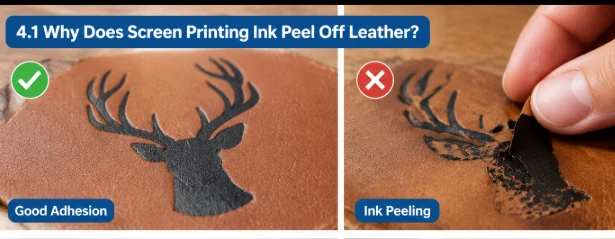
Why Does Screen Printing Ink Peel Off Leather?
Ink peeling often indicates poor bonding between the ink and leather surface. Contamination, incompatible coatings, insufficient curing, or the absence of a necessary primer can all contribute to adhesion problems.
To improve adhesion:
① Check whether the surface contains oil, wax, or other contaminants.
② Confirm that the ink is suitable for the leather coating.
③ Evaluate whether a primer is necessary.
④ Review the curing process.
⑤ Conduct adhesion tests before production.
Simply increasing the curing temperature does not necessarily solve poor adhesion. The problem may come from material incompatibility rather than insufficient heat.
Why Does Screen Printing Ink Crack When Leather Bends?
Cracking can occur when the cured ink film cannot withstand the movement of the leather. Low flexibility, excessive ink thickness, and unsuitable curing conditions may contribute to this problem, especially on leather products that are frequently bent or folded.
Possible improvements include:
◆ Choosing an ink formulation with suitable flexibility.
◆ Avoiding excessive ink buildup.
◆ Adjusting the number of printing layers.
◆ Testing the finished print through repeated bending.
The goal is to achieve a balance between adhesion, ink film strength, and flexibility.
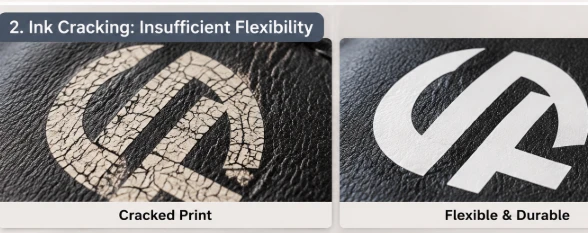
How Do You Test Screen Printing Quality on Leather Before Mass Production?
Before mass production, evaluate printed leather through adhesion, bending, and scratch resistance tests. Use the actual leather substrate, selected ink, and planned curing conditions for each test. Comparing sample results helps manufacturers identify compatibility problems early and reduce the risk of production defects.
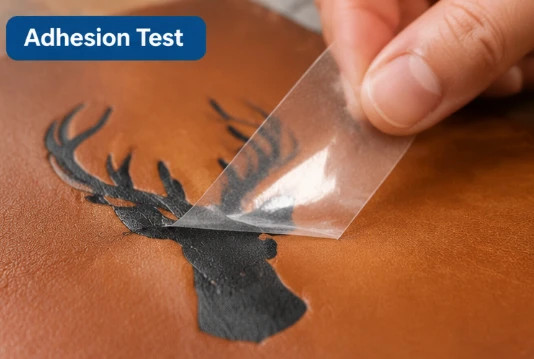
How Do You Test Ink Adhesion on Leather?
A suitable adhesion test helps determine whether the cured ink remains attached to the leather surface. A controlled tape test can be used as an initial evaluation, provided that the method is appropriate for the specific substrate and coating.
During testing:
1. Allow the ink to complete its recommended curing process.
2. Apply a suitable test tape under controlled conditions.
3. Remove the tape consistently.
4. Inspect the printed surface for peeling or ink transfer.
Record the material type and test conditions so different ink samples can be compared fairly.
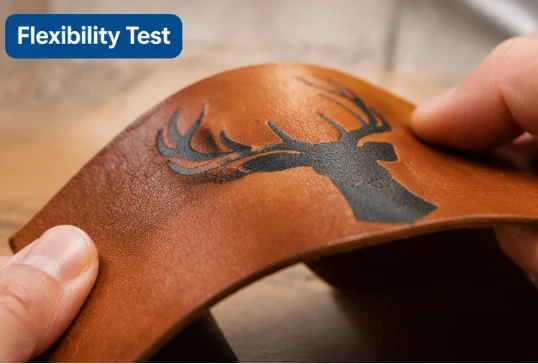
How Do You Test Flexibility and Bending Resistance?
Repeated bending helps evaluate whether the printed ink film can withstand the movement expected during product use. After bending the leather sample, inspect the print for cracks, peeling, or separation.
Pay attention to:
● Visible cracks along the printed area.
● Separation between ink and leather.
● Changes in print appearance.
● Differences between samples with different ink thicknesses.
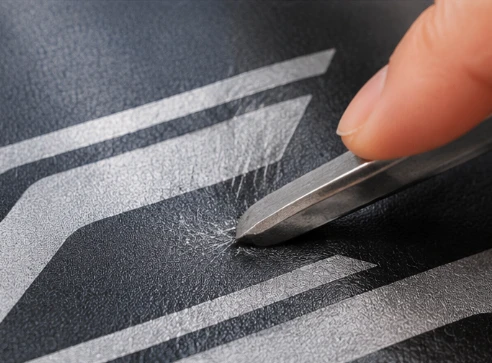
How Do You Test Scratch and Abrasion Resistance?
Scratch and abrasion testing evaluates how well the printed surface withstands friction. Apply consistent testing conditions to each sample and compare changes in ink appearance, color, and surface integrity.
For reliable comparisons, document the testing equipment, applied conditions, and results. Standards such as ASTM D4060 may provide a reference for appropriate abrasion testing setups, although the method must be adapted to the actual leather sample and application.
What Should You Consider Before Choosing Leather Screen Printing Ink?
When choosing leather screen printing ink, buyers should consider substrate compatibility, adhesion, flexibility, curing requirements, and resistance to expected use conditions. Request technical documentation and samples from suppliers, then test the ink on the actual leather before approving it for mass production.
Before placing an order, ask the ink supplier:
◆ Is the ink suitable for genuine leather, PU leather, or PVC leather?
◆ Is a primer required?
◆ What are the recommended curing conditions?
◆ Does the cured ink provide sufficient flexibility?
◆ Can samples be provided for testing?
◆ Is technical support available during production?
A reliable supplier should be able to explain the ink's application requirements and help evaluate its suitability for the intended substrate. At YRsilicone, we believe material compatibility and sample testing should come before large-scale production decisions. If you are evaluating a silicone ink solution for a specific leather application, providing the substrate type and printing requirements is a useful starting point for technical assessment.
fAQ About Screen Printing on Leather?
Screen printing on leather raises practical questions about ink compatibility, adhesion, curing, and durability. The following answers address common concerns from manufacturers and buyers before they begin printing or select an ink supplier.
1. Can You Screen Print on PU Leather?
Yes. PU leather can be screen printed, but the ink must be compatible with its polyurethane surface coating. Testing adhesion and flexibility on the actual material is recommended before production.
2. Does Screen Printing on Leather Require Heat Curing?
Not always. Some inks air-dry, while others require heat or UV curing. The correct method depends on the ink formulation and leather heat resistance.
3. Can Screen Printing Ink Crack on Leather?
Yes. Ink may crack when its flexibility is insufficient for the movement of the leather. Excessive ink thickness and unsuitable curing conditions can also contribute to cracking.
4. Is Screen Printing Suitable for Mass Production on Leather?
Yes. Screen printing can be suitable for repeatable designs and larger production runs. However, manufacturers should first verify ink compatibility, sample quality, and process consistency.